
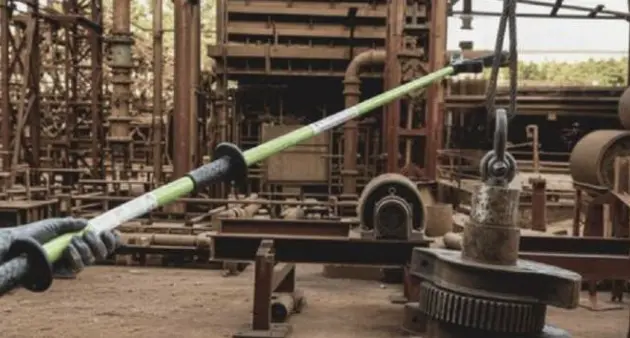
Find The Hand™ begins before a product is selected. Watch the task and identify the point where the worker’s hand performs a control function close to a hazardous load, edge, impact point or closing clearance.
1. Identify the hand’s job
Is the hand guiding, holding, aligning, stabilising, retrieving or carrying? A request for “a safety pole” can hide several different needs. Name the function before choosing an interface.
2. Identify the energy and movement
Consider suspended-load movement, rolling objects, stored mechanical energy, impact and the closing gap between components. Establish the required isolation, support and lifting method before proposing a tool.
3. Review the higher-order controls
Ask whether the task or hazardous contact can be eliminated. Consider redesigned fixtures, mechanical handling, isolation and other engineering controls. A hand tool is appropriate only where it supports the assessed method and does not introduce a new line-of-fire position.
4. Match the interface
Separate guidance poles, magnetic guidance tools, taglines, retrievers, manual carrying aids and striking-tool holders. They serve different purposes and their ratings are not interchangeable. A magnetic attachment figure is not automatically a working load limit for lifting.
5. Trial under a controlled method
Use representative tasks and trained operators. Record engagement, release, working posture, visibility, communication and escape routes. Evaluate residual exposure and stop if the tool encourages an unsuitable action.
6. Document and repeat
Define the approved configuration, limitations, inspection checks and storage location. Review operator feedback and changes in the task before replicating a solution across a workshop, site or fleet.
Start with one application
Australian teams can share photographs, a short task description and the operating constraints with PSC. The next step may be a standard product, a modified interface, a trial or a recommendation to reconsider the method itself.
From reading to application
Describe the task, the moving load and the point where hands approach the hazard. Use the PSC catalogue to identify the relevant function, then request selection support.
Browse PSC & HSF tools ↗ · Australian sources and further reading ↗